Diagrams are marks, not decoration
Labelled diagram questions are predictable and heavily weighted. The 65 diagram studios let a student build and check labels interactively rather than glance at a printed figure.
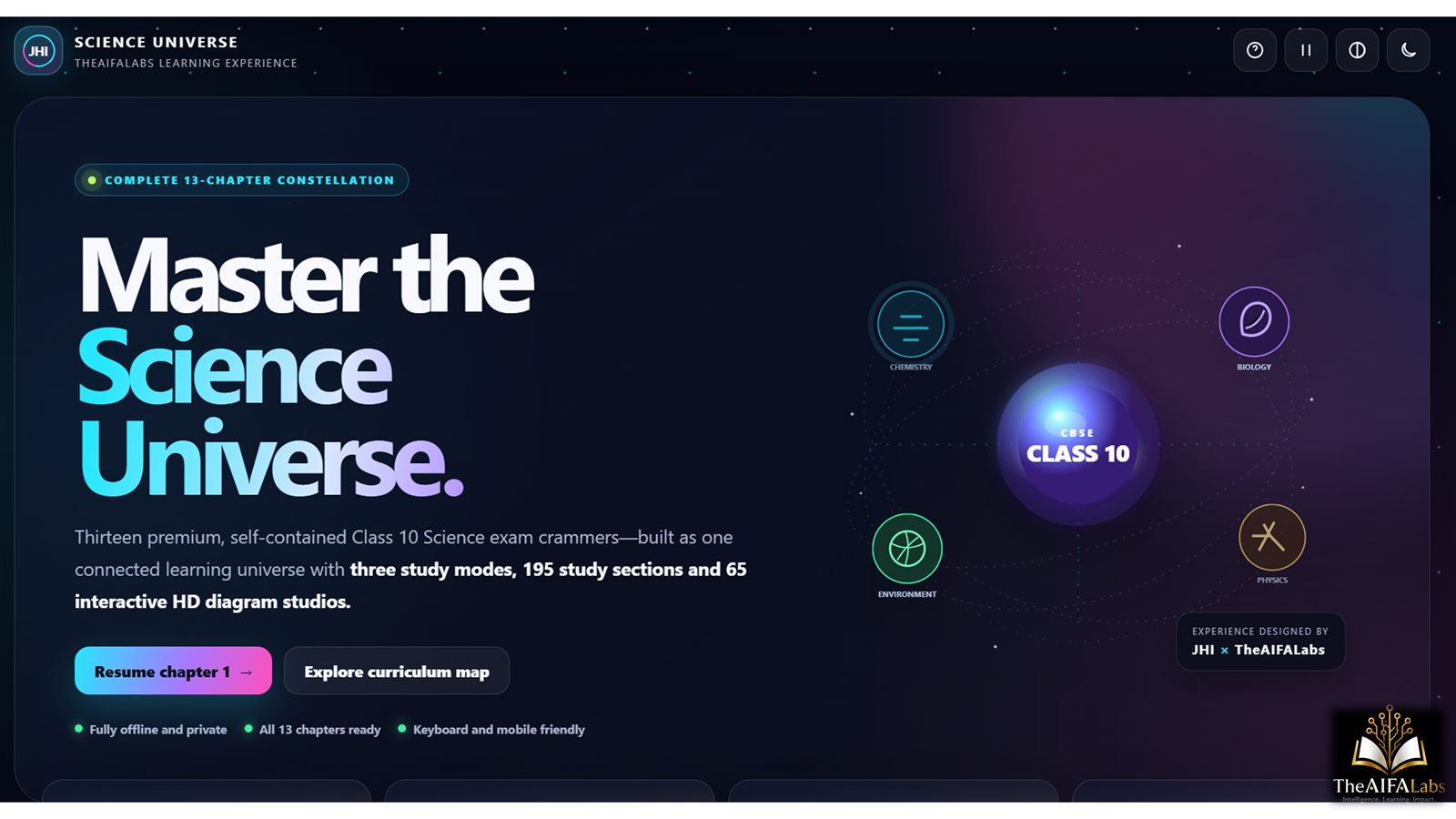
Thirteen connected chapter modules covering Physics, Chemistry and Biology, built around 195 learning sections and 65 interactive HD diagram studios. Three additive study modes let a student go from a quick pass to full board depth without switching resources.
$24$10 one-time
Launch pricing. Going up to $24 soon — buy now and keep lifetime access at $10.
Secure checkout handled by Gumroad. Refund terms in our terms of service.
Physics needs numerical practice, Chemistry needs reaction recall, Biology needs labelled diagrams. Most students revise all three the same way and lose marks in whichever one that method suits least.
Labelled diagram questions are predictable and heavily weighted. The 65 diagram studios let a student build and check labels interactively rather than glance at a printed figure.
Recognising a reaction in the textbook is not the same as reproducing it in an exam hall. Flashcards target exactly the items that must come back without prompting.
Physics numericals reward pattern familiarity. The practice bank groups them by type so a student sees the same shape of problem repeatedly until it is automatic.
Each chapter is a self-contained module, linked from one master index.
Chapter set follows the current rationalised NCERT Class 10 Science syllabus. Always cross-check against the syllabus published by your school for the year you are sitting.
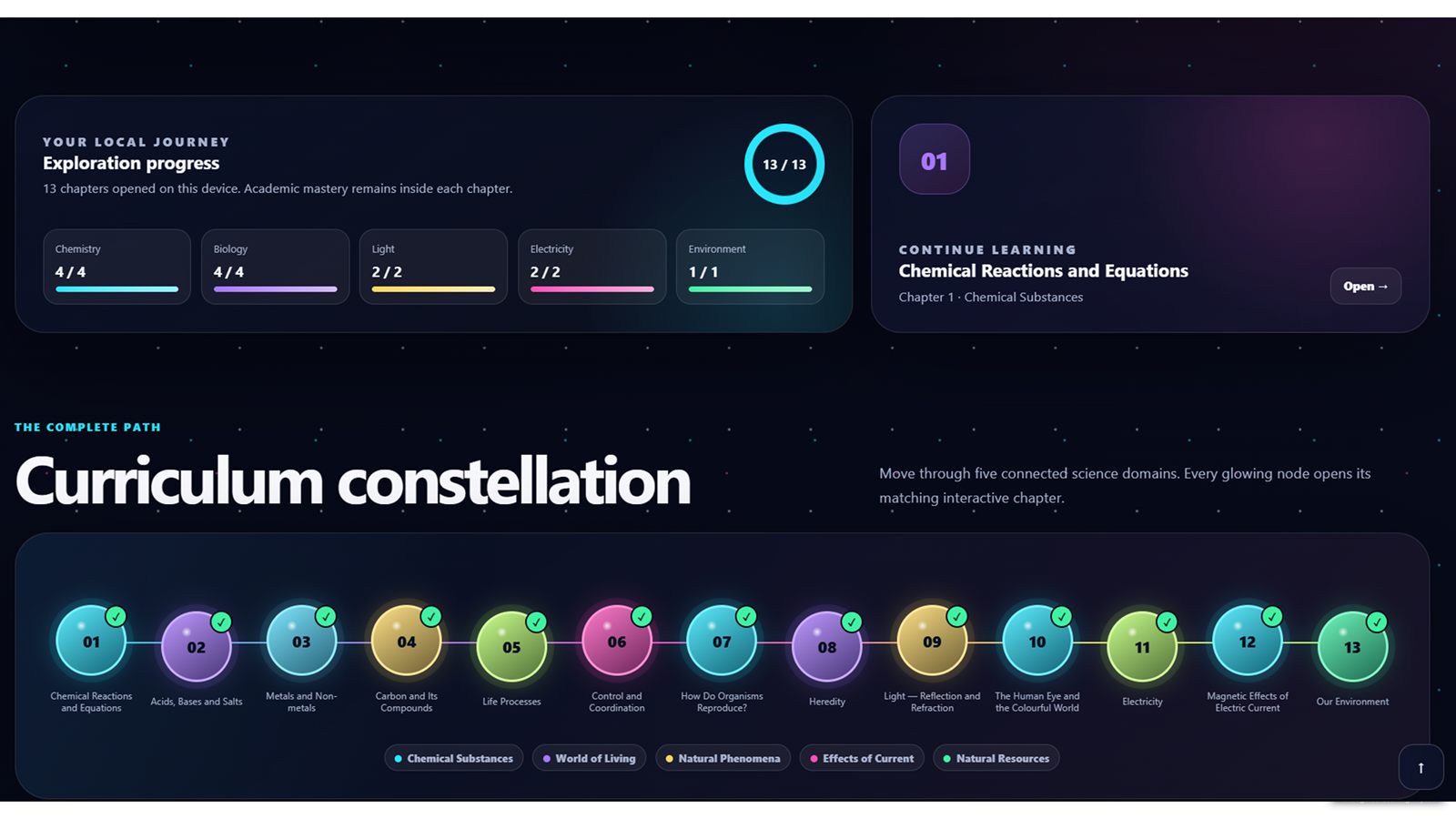
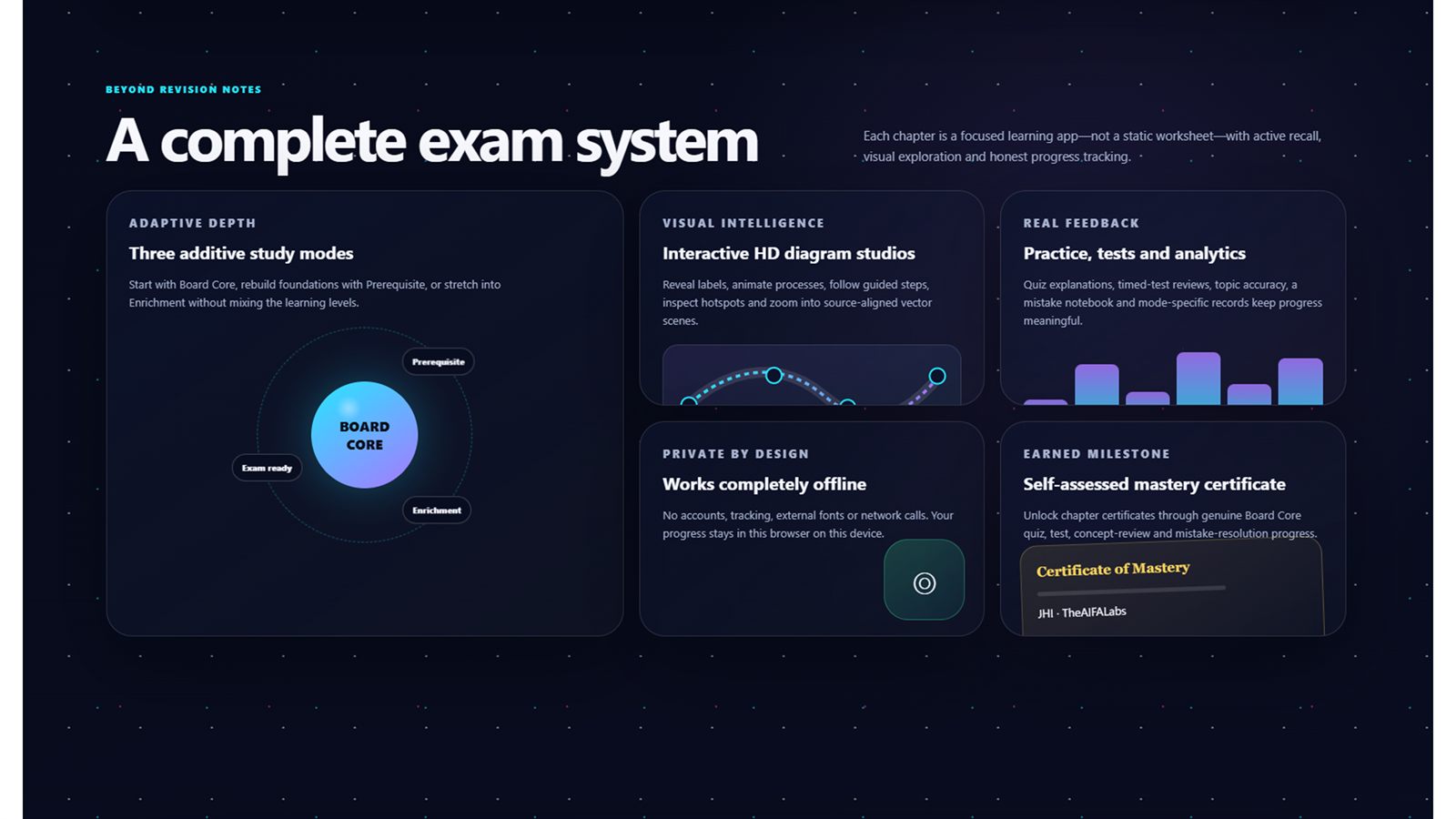
Labelled-diagram and mechanism questions are predictable and heavily weighted. These are interactive HD vector studios, not scanned textbook figures — a sample of what is inside.
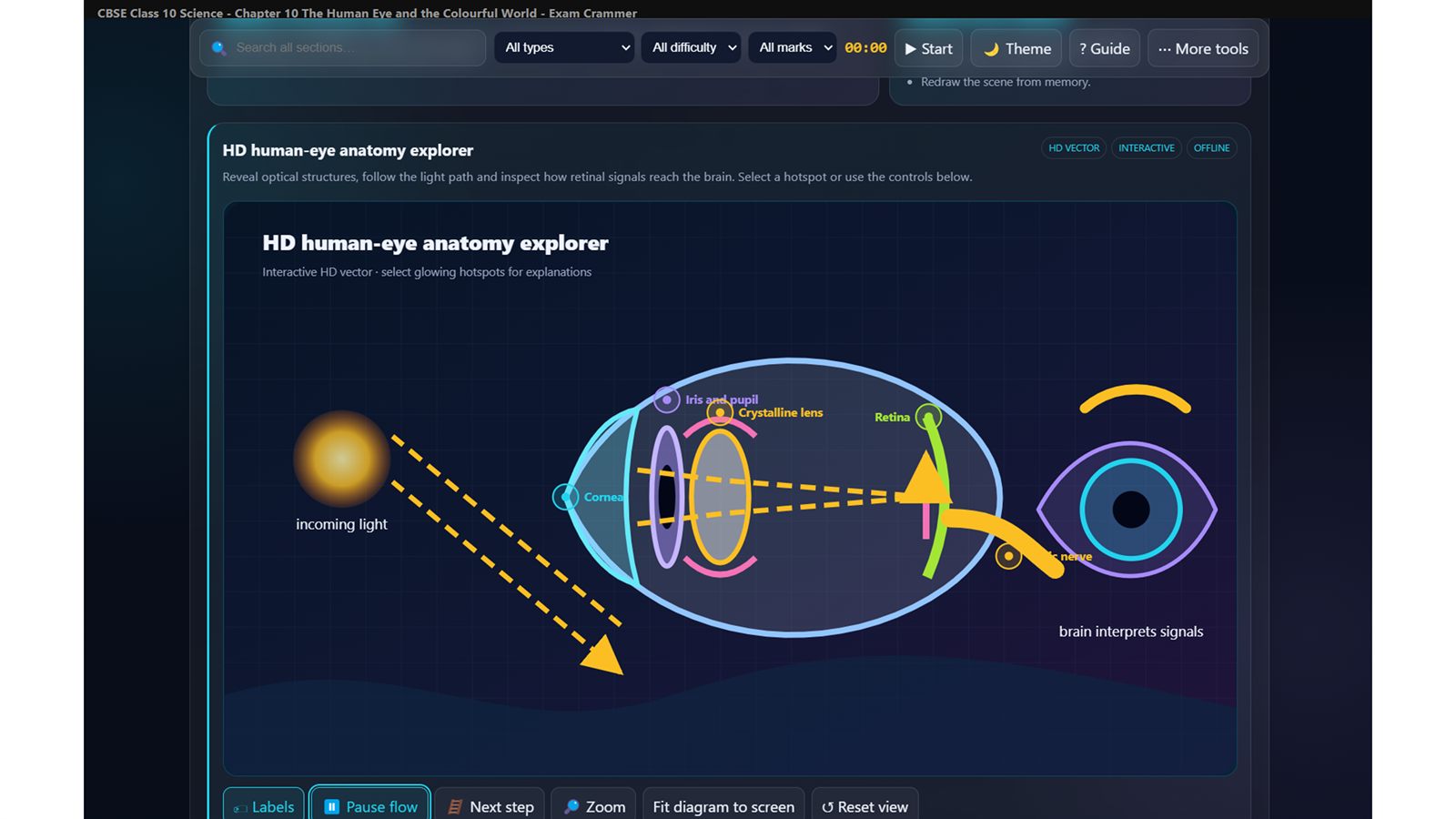
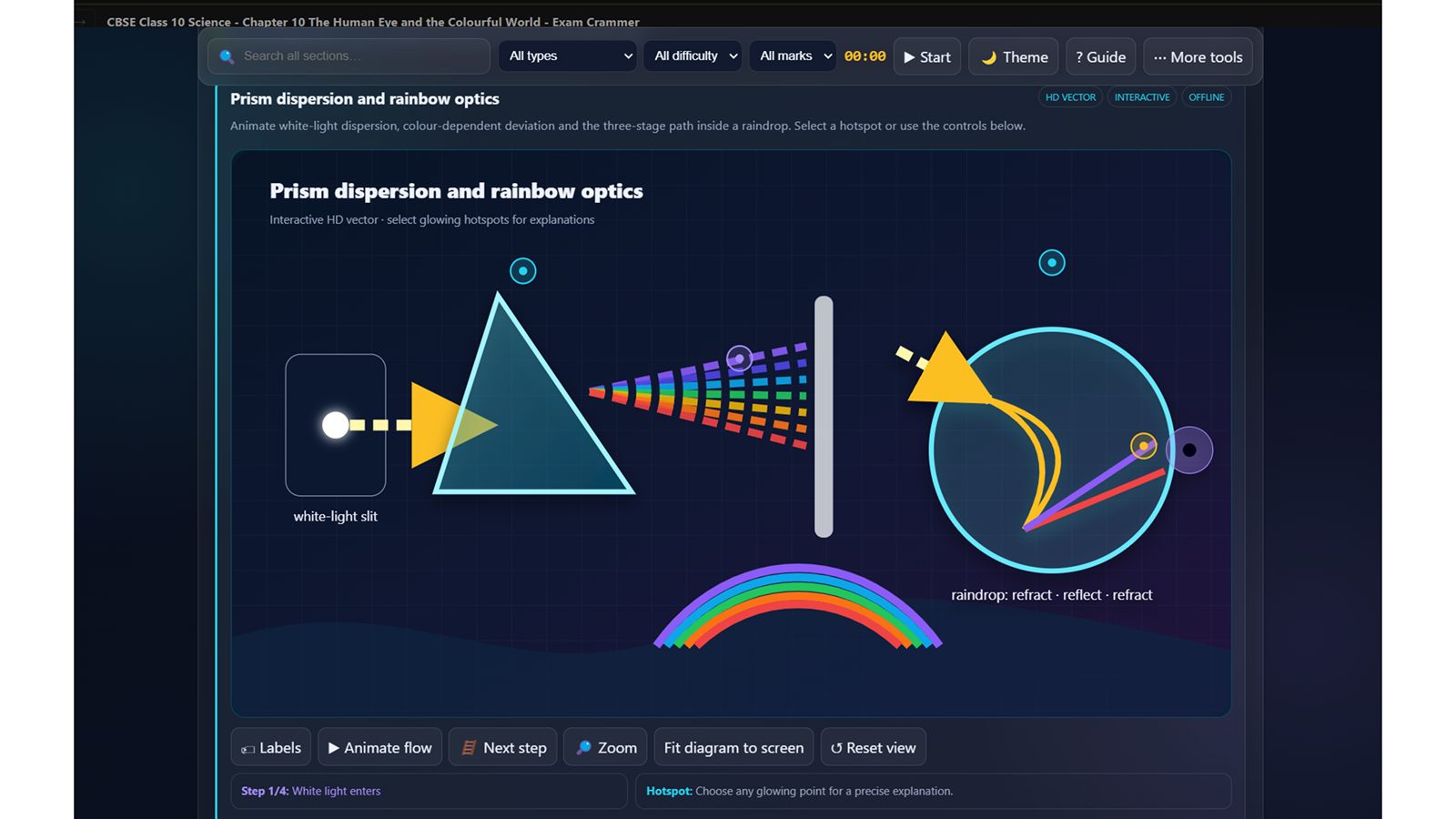
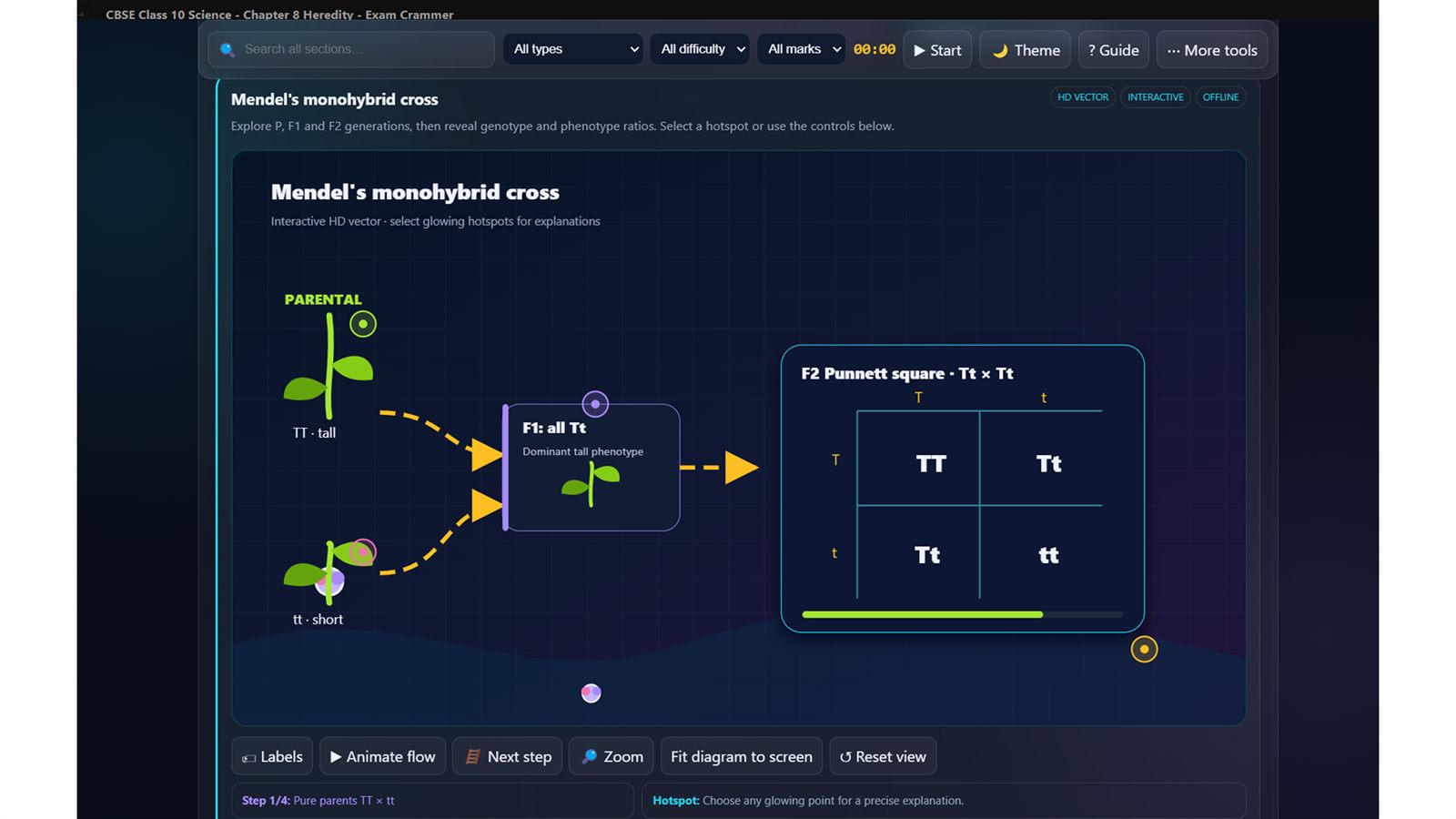
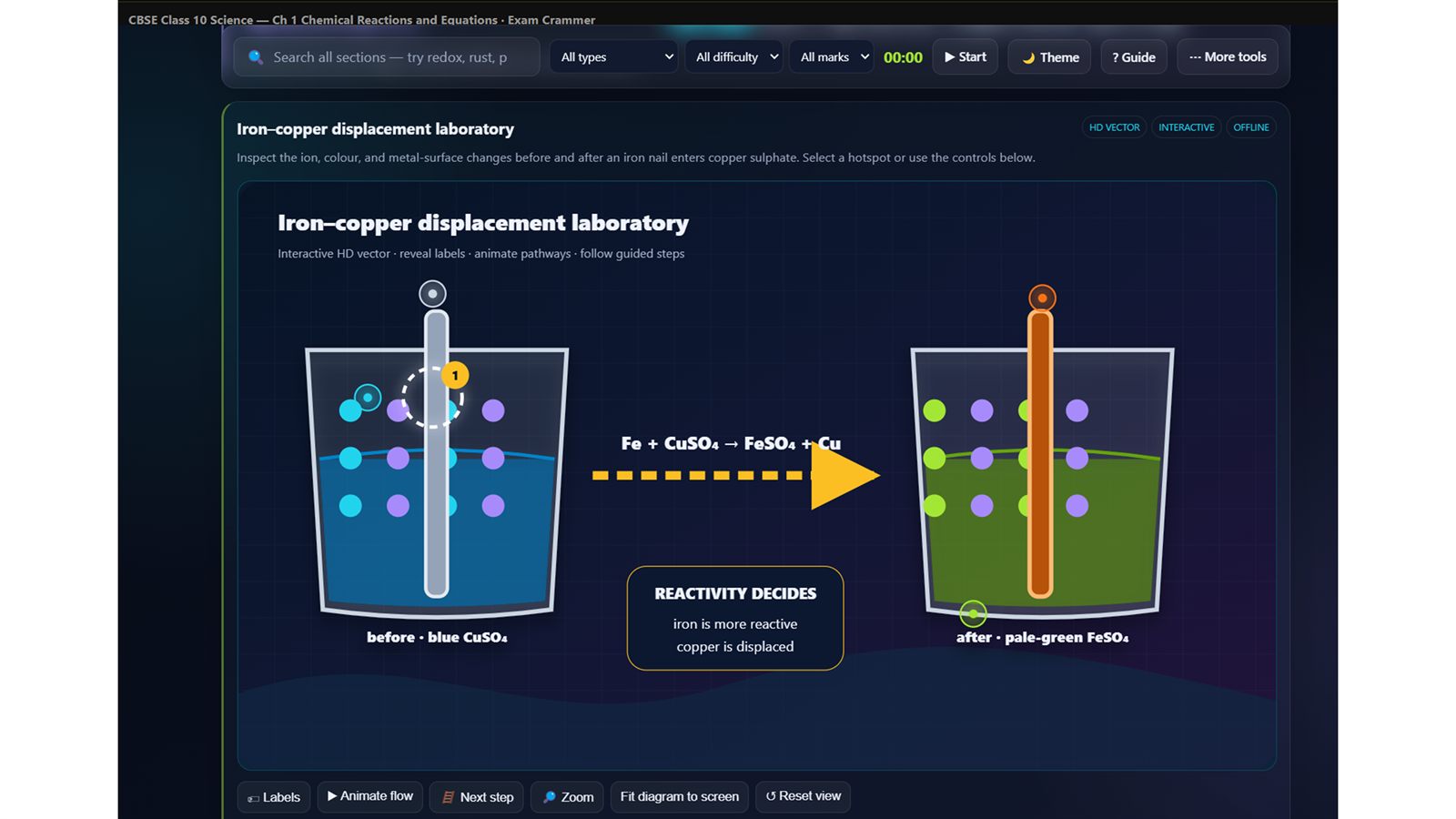
Everything below is a screenshot of the Science Exam Crammer as it ships today.
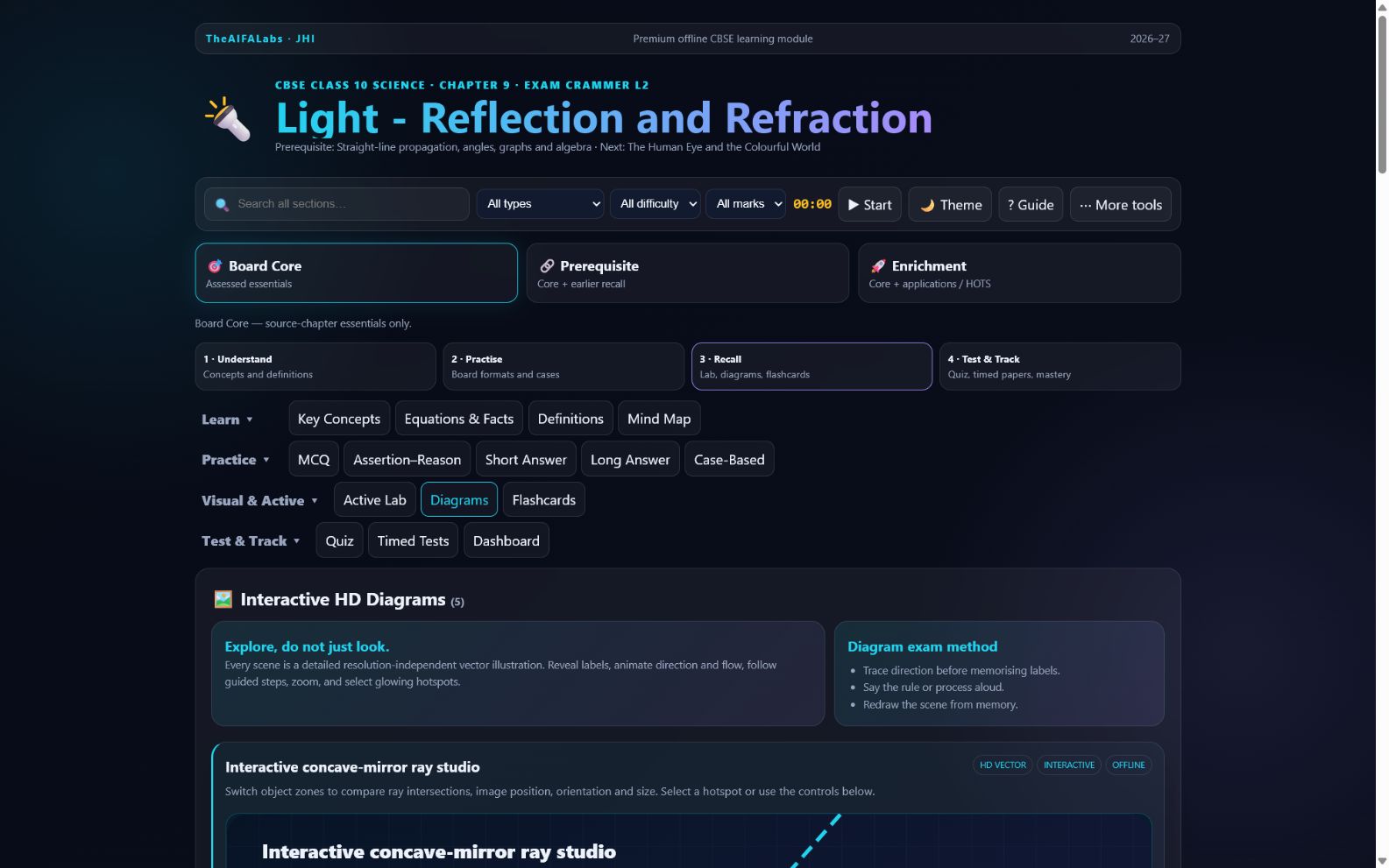
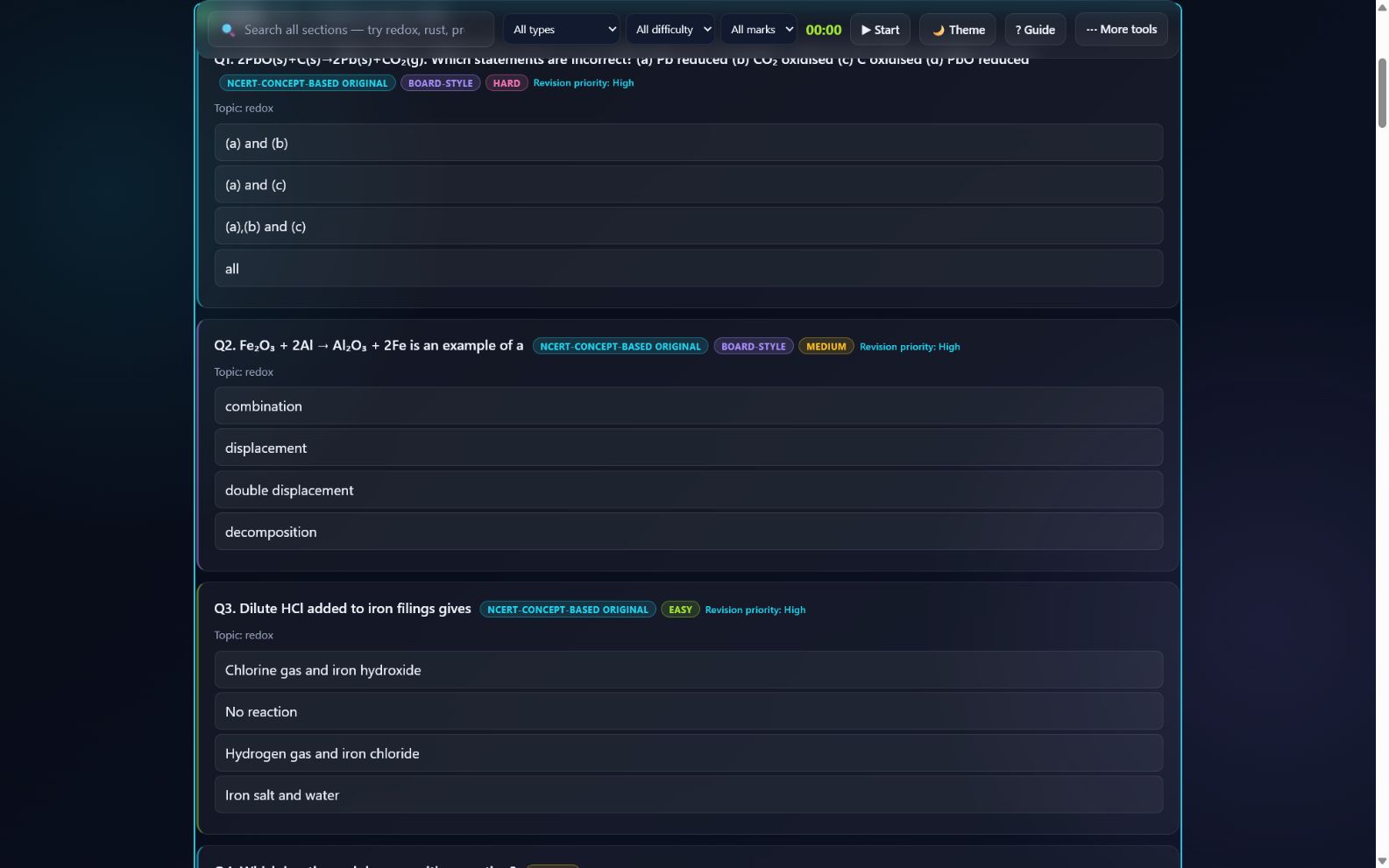
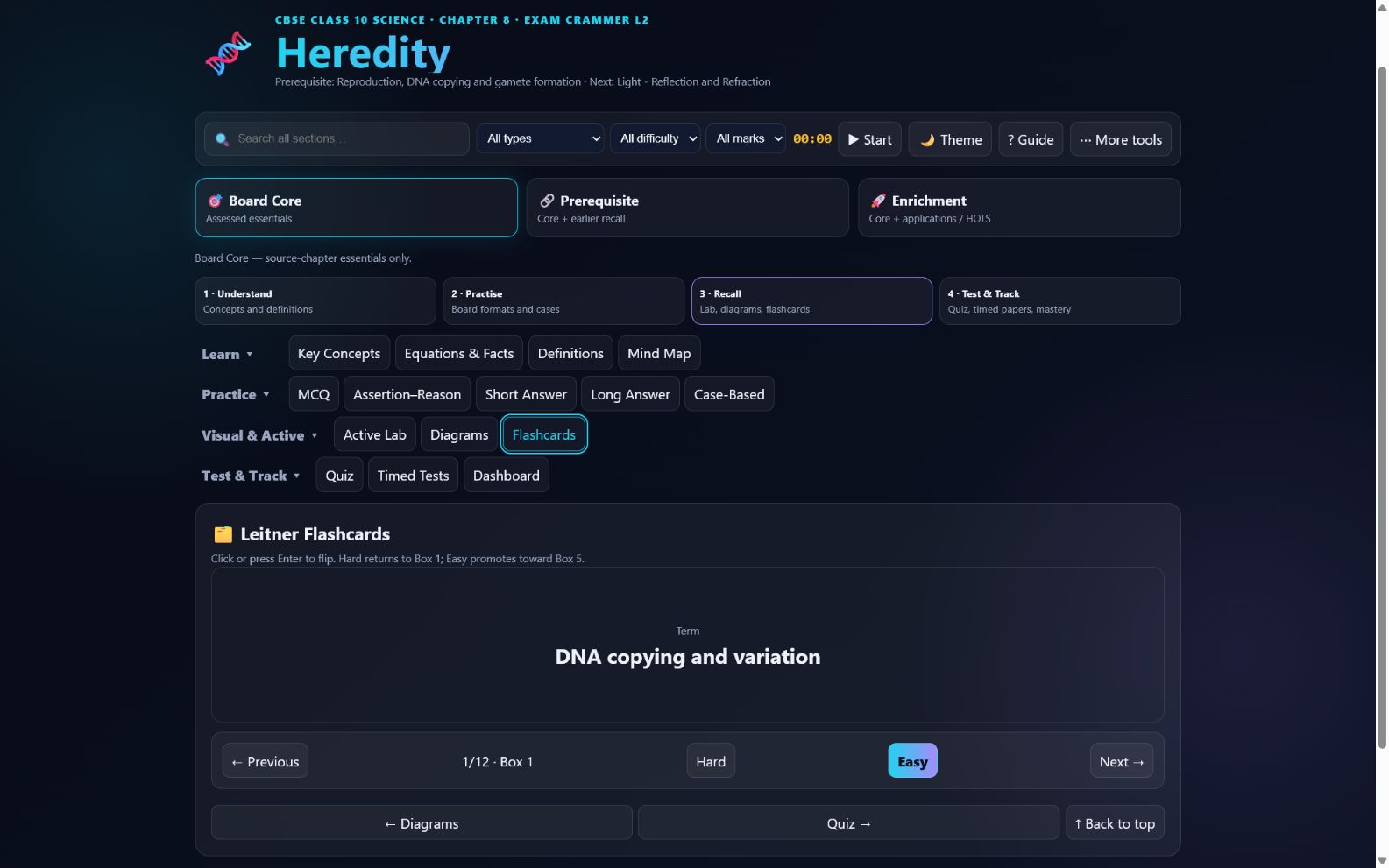
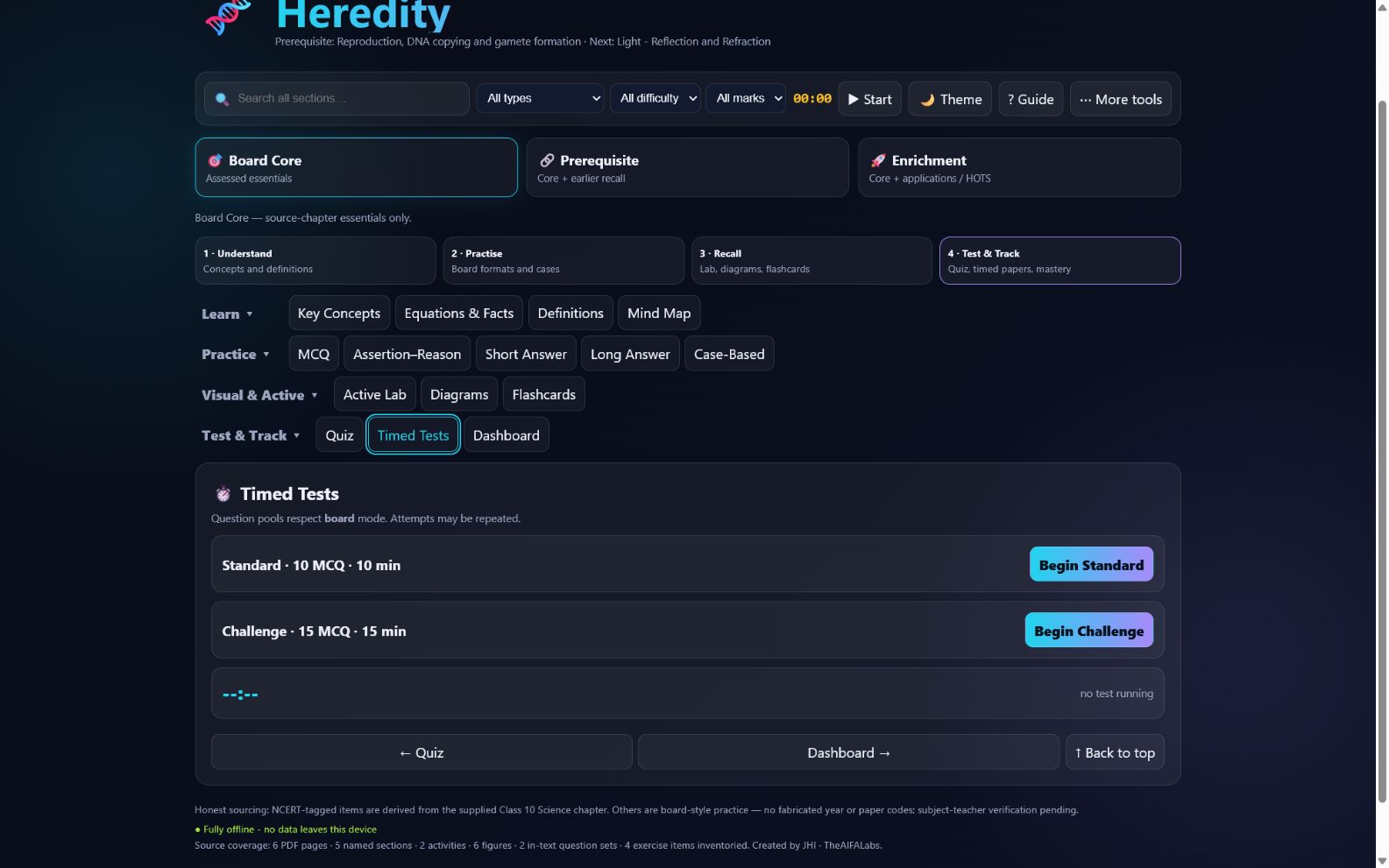
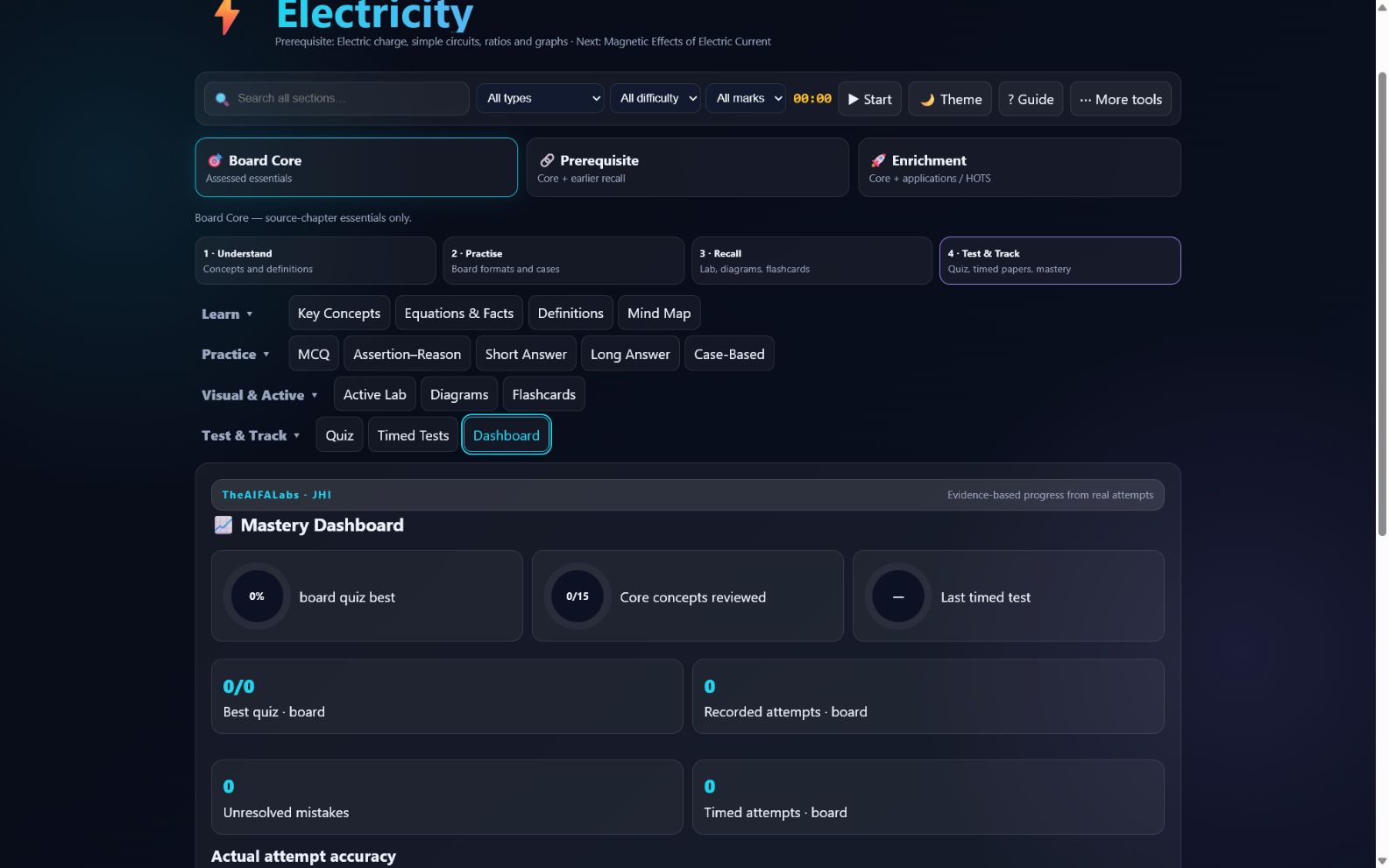
Start light for a first pass, add depth for board preparation, then go to full depth for the final revision. The same chapter serves all three.
Vector diagrams you can explore and label — the human eye, the heart, electrical circuits, reflection geometry — rendered sharply at any screen size.
The syllabus broken into sections small enough to finish in one sitting, so progress is visible daily rather than at the end of a chapter.
Objective questions for speed, long-answer questions for structure, each with progressive hints before the full solution.
Recall drills on definitions, reactions and units, plus interactive labs that make the abstract parts of the syllabus manipulable.
Timed tests feed a mastery dashboard and a self-assessed completion certificate, so a student can see readiness rather than guess at it.
Not affiliated with CBSE or NCERT, and not a substitute for the textbook, the lab or the teacher. We do not promise marks, and we do not claim official endorsement.
What it does is remove the tab-switching: one place to understand a chapter, practise it, drill the recall and test whether it has stuck. For an information-dense subject taught across three disciplines, that structure is most of the battle.